Strategic Clarity: Leveraging 5 Portfolio UI Elements for High-Impact Digital Presence
In the digital economy, your portfolio is not merely a gallery of past work; it is a strategic asset that communicates competence, taste, and reliability. For entrepreneurs, freelancers, and creative professionals, the difference between a prospective client scrolling past and one who initiates contact often lies in the clarity and professionalism of the user interface. This is where the concept of 5 Portfolio UI Elements becomes critical. These are not just decorative components but foundational building blocks designed to streamline communication and enhance user experience.
When you utilize a system built around these five core elements, you are investing in a framework that prioritizes usability and aesthetic coherence. The value proposition is clear: a simple, clean, and modern design reduces cognitive load for your visitors, allowing them to focus on what matters most—your work and your value proposition. By adopting a template or design system that emphasizes these elements, you gain the ability to present complex services or products in an accessible, visually appealing manner.
The Strategic Value of Simplified Design Architecture
Many creators fall into the trap of over-designing. They believe that complexity equals sophistication. However, experienced practitioners know that simplicity is the ultimate sophistication. A portfolio built on 5 Portfolio UI Elements strips away the non-essential, leaving only what drives conversion and engagement. This approach supports better decision-making for your users. When navigation is intuitive and visual hierarchy is clear, users can quickly assess whether your skills align with their needs.
Consider the operational efficiency this brings. Instead of spending weeks coding a custom layout from scratch or hiring an expensive agency for minor updates, you can leverage a fully organized PSD source file. This allows for rapid iteration. You can test different layouts, color schemes, and content arrangements without technical debt. For small business owners and marketers, this agility is crucial. It means your digital presence can evolve alongside your business strategy, ensuring that your branding remains consistent and relevant.
Furthermore, the use of Google Fonts and RGB color profiles ensures that your portfolio looks consistent across devices and platforms. This attention to detail signals professionalism. It tells potential clients that you understand the nuances of digital delivery and care about the end-user experience. In a competitive market, these subtle signals of quality can be the deciding factor in securing high-value contracts.
Customization as a Tool for Brand Positioning
One of the most significant advantages of using a customizable system based on 5 Portfolio UI Elements is the balance between structure and flexibility. While the underlying architecture provides stability, the ability to easily change color styles and edit layers in Adobe Photoshop allows for deep personalization. This is essential for maintaining brand integrity.
Your brand is more than a logo; it is the sum of every interaction a user has with your business. By having full control over the visual elements, you can ensure that your portfolio reflects your unique voice. Whether you are a minimalist architect or a vibrant graphic designer, the template serves as a canvas, not a constraint. You can adjust typography to match your brand guidelines, modify spacing to create a sense of luxury or urgency, and tweak imagery to highlight your specific niche.
This level of customization also supports long-term branding goals. As your business grows, your visual identity may mature. A rigid, hard-coded website can become a liability, requiring extensive redevelopment to update. In contrast, a well-organized PSD file allows you to refresh your look with minimal effort. You can experiment with new color palettes or layout structures to see what resonates with your audience before committing to a full-scale redesign. This iterative approach reduces risk and ensures that your design decisions are data-driven rather than based on guesswork.
Enhancing Productivity and Operational Efficiency
Time is a scarce resource for freelancers, educators, and entrepreneurs. Every hour spent wrestling with code or debugging layout issues is an hour not spent on billable work or strategic planning. Using a pre-built, fully organized layer structure in Photoshop significantly accelerates the design process. You are not starting from a blank slate; you are starting from a proven foundation.
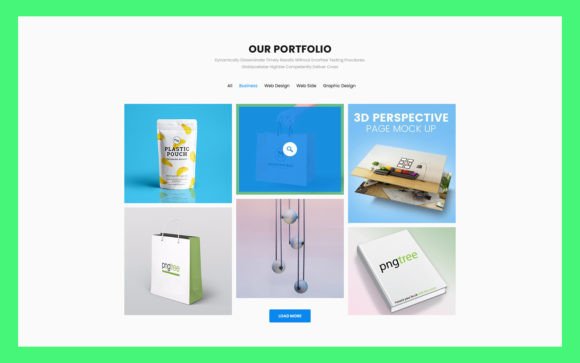
The "fully organized layers" feature is not just a convenience; it is a productivity multiplier. It allows for non-destructive editing, meaning you can make changes without fear of breaking the entire design. If a client requests a different accent color or a rearrangement of project thumbnails, these changes can be implemented in minutes rather than days. This responsiveness enhances your professional reputation, showing clients that you are agile and attentive to their feedback.
Moreover, the simplicity of the design system reduces the learning curve for team members. If you collaborate with other designers or marketers, they can quickly understand the file structure and contribute effectively. This fosters better collaboration and ensures consistency across all marketing materials. For agencies and small teams, this standardization is key to scaling operations without sacrificing quality.
Risks of Aimless Implementation
While the benefits of using 5 Portfolio UI Elements are substantial, there are risks if the tool is used without clear intent. The primary danger is genericism. Because these templates are designed to be versatile, there is a temptation to use them "out of the box" without sufficient customization. This can result in a portfolio that looks indistinguishable from competitors, failing to communicate your unique value proposition.
To mitigate this risk, you must approach customization strategically. Do not simply change colors for the sake of change. Every design decision should serve a purpose. Ask yourself: Does this layout highlight my best work? Does this typography reflect my brand personality? Is the navigation intuitive for my target audience? Without these guiding questions, you risk creating a visually pleasing but strategically empty portfolio.
Another risk is neglecting content quality. A beautiful interface cannot compensate for weak case studies or unclear messaging. The UI elements are there to frame your content, not replace it. Ensure that your project descriptions, testimonials, and calls to action are compelling and clear. The design should amplify your message, not distract from it.
Practical Guidelines for Intentional Use
To maximize the impact of 5 Portfolio UI Elements, consider the following practical steps:
- Define Your Goal: Before opening Photoshop, clarify what you want visitors to do. Are they hiring you for a service? Buying a product? Subscribing to a newsletter? Your design choices should funnel users toward this action.
- Audit Your Content: Select only your strongest work. A curated portfolio is more effective than a comprehensive one. Use the clean design to let each piece breathe.
- Customize Thoughtfully: Use the editable layers to align the design with your brand guidelines. Pay attention to whitespace, typography hierarchy, and color contrast to ensure readability and accessibility.
- Test for Usability: Once your design is ready, test it on multiple devices. Ensure that the responsive elements function correctly and that the user journey is smooth on both desktop and mobile.
- Iterate Based on Feedback: Monitor user behavior and gather feedback. Use the flexibility of the PSD file to make adjustments based on real-world data.
By following these guidelines, you transform a simple template into a powerful strategic tool. You move beyond aesthetics to create a functional asset that drives business results.
Long-Term Results and Sustainable Growth
The ultimate goal of any professional portfolio is to generate sustainable growth. This means attracting the right clients, commanding higher fees, and building a reputable brand. A well-executed design based on 5 Portfolio UI Elements supports this by creating a positive first impression and facilitating easy communication.
When your portfolio is easy to navigate and visually coherent, it builds trust. Trust is the currency of the digital age. Clients are more likely to engage with professionals who appear organized, competent, and attentive to detail. By investing in a high-quality, customizable design system, you are signaling that you take your craft seriously.
Furthermore, the ease of maintenance ensures that your portfolio remains current. An outdated website can harm your credibility. With a flexible PSD source file, you can regularly update your work, refresh your branding, and adapt to new trends without significant cost or effort. This longevity is crucial for long-term success.
In conclusion, the strategic use of 5 Portfolio UI Elements offers a pathway to a more professional, efficient, and effective online presence. It combines the rigor of structured design with the freedom of customization, allowing you to create a portfolio that is both beautiful and functional. By approaching this tool with intention and clarity, you can enhance your brand positioning, improve user experience, and achieve better business outcomes. Remember, the design is not the destination; it is the vehicle that carries your message to the world. Choose a vehicle that is reliable, adaptable, and aligned with your journey.