Streamlining Your Digital Publishing Workflow with Ebook Chapters in Adobe XD
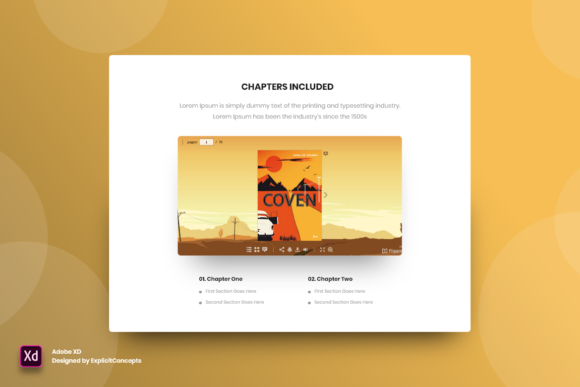
Creating an ebook is often less about the writing and more about the presentation. You can have the most compelling content in the world, but if the layout feels disjointed or the visual hierarchy is confusing, readers will disengage. This is where having a solid structural foundation becomes non-negotiable. Ebook Chapters - Adobe XD serves as that foundation, offering a pre-built, highly organized framework that allows creators to bypass the tedious initial setup phases of design.
For many freelancers, marketers, and small business owners, time is the most scarce resource. Starting a chapter layout from a blank canvas in Adobe XD can consume hours that are better spent on content refinement or marketing strategy. By utilizing a template that is already well-organized in layers with clear names, you shift your focus from technical arrangement to creative expression. This approach doesn’t just save time; it ensures a level of professional consistency that is difficult to achieve when rushing against a deadline.
Why Structure Matters in Digital Reading Experiences
Digital reading habits differ significantly from print. Screens introduce variables like backlighting, scrolling behavior, and varying device sizes. A chaotic file structure in your design software often translates to a chaotic user experience in the final product. When you work with Ebook Chapters - Adobe XD, the underlying organization directly impacts the quality of your output.
The fact that these files are fully editable and really easy to use means that you aren’t locked into a rigid aesthetic. Instead, you are provided with a flexible skeleton. Consider the frustration of trying to change a font color across fifty pages because the original designer didn’t use consistent layer naming. With clear names and high-quality 72 dpi assets, every element is accessible. This clarity allows you to make global changes quickly, ensuring that your brand colors or typography updates are applied uniformly without manual hunting through hidden groups.
Real-World Applications for Different Creators
The versatility of this resource makes it suitable for a wide array of users. Here is how different professionals can leverage these templates in their daily workflows.
Content Marketers and Lead Generation
For marketers, ebooks are primary tools for lead generation. You might need to produce a whitepaper or a guide every month to keep your funnel active. The pressure to deliver high-quality visuals consistently can lead to burnout. By using Ebook Chapters - Adobe XD, you create a reusable master file. Once you customize the fonts and colors to match your brand guidelines, you can swap out text and images for each new campaign. This reduces the production time per ebook by half, allowing you to test more topics and formats without increasing your workload.
Educators and Course Creators
Online educators often supplement video courses with downloadable PDFs. These resources need to be visually engaging to maintain student interest, yet they must remain readable. The ready-to-use nature of these templates means you can focus on pedagogical clarity. You can easily move or remove elements to create space for diagrams, checklists, or summary boxes. Because the format is Adobe XD, you can also prototype interactive elements if you plan to distribute the content via web links, adding clickable tables of contents or navigation buttons that enhance the learning experience.
Freelance Designers and Agencies
If you manage multiple clients, context switching is a major productivity killer. Having a standardized, high-quality starting point allows you to onboard new ebook projects rapidly. The well-organized layers mean that if a client asks for a last-minute change—such as adjusting the hierarchy of a chapter header—you can execute it in seconds rather than minutes. Over the course of a year, these small efficiencies add up to significant billable hour savings or increased capacity for additional clients.
Navigating the Technical Features
Understanding the technical specifications helps you get the most out of the file. The resource is provided in the Adobe XD format, which is vector-based. This is crucial for scalability. Whether your reader is viewing the ebook on a smartphone or a large desktop monitor, the text and shapes remain crisp. The 72 dpi resolution is standard for screen-based reading, ensuring that file sizes remain manageable for email delivery and web downloads without sacrificing visual fidelity.
The emphasis on being "fully editable" is not just a marketing claim; it is a functional reality. You can edit texts, fonts, and colors directly. If your brand uses a specific shade of blue, you can update the master color style, and the entire document reflects that change. Similarly, moving or removing elements is intuitive because the layers are logically grouped. You won’t find yourself clicking through twenty nested groups just to delete a decorative icon. This logical structure respects your time and reduces the cognitive load associated with complex design files.
Considerations Before You Start Designing
While Ebook Chapters - Adobe XD offers a significant head start, there are practical considerations to keep in mind to ensure a smooth workflow.
- Brand Alignment: Before diving into the edits, review the default typography and spacing. Does it align with your existing brand voice? It is easier to adjust these global styles at the beginning than to retrofit them after you have populated the content.
- Content Length: Templates provide a structure, but your content dictates the flow. Be prepared to duplicate or delete chapter pages based on the depth of your topic. The flexibility of the file allows for this, but you should plan your outline first to determine how many variations of the chapter layout you might need.
- Image Assets: While the template provides placeholders, you will need your own high-resolution images. Ensure your photos are optimized for web use to keep the final PDF file size reasonable. Since the template is 72 dpi, importing 300 dpi print images is unnecessary and may bloat the file.
- Software Compatibility: Ensure you have a recent version of Adobe XD installed. While the software is widely available, older versions might not support certain component features used in newer templates.
Maximizing Efficiency Through Smart Customization
The true value of Ebook Chapters - Adobe XD lies in how you customize it. Do not treat it as a static artifact. Use it as a dynamic system. For instance, if you are creating a series of ebooks, consider creating three distinct chapter variations within the same file: one for text-heavy sections, one for image-focused case studies, and one for data-driven charts. This variety keeps the reader engaged without requiring you to design new layouts from scratch.
Furthermore, take advantage of the clear layer names to set up your own component library. If you find yourself frequently using a specific call-out box or quote style, convert it into a component within XD. This allows you to drag and drop consistent elements throughout your document, maintaining visual harmony with minimal effort.
In a digital landscape saturated with content, professionalism stands out. Using a well-structured, high-quality template like Ebook Chapters - Adobe XD signals to your audience that you value their reading experience. It removes the friction of poor design, allowing your ideas to take center stage. Whether you are a solo entrepreneur launching your first guide or an established agency managing multiple accounts, this tool provides the reliability and flexibility needed to produce exceptional digital publications efficiently.