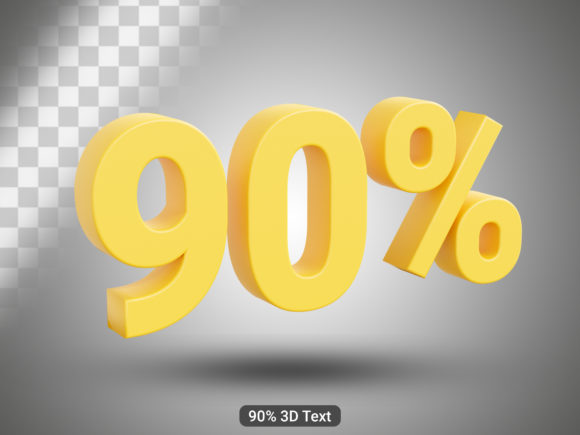
Mastering the 90 Percent Rule in Design
In the world of digital creation, there is a pervasive myth that perfection is the only metric that matters. We obsess over every pixel, tweak every curve, and delay launches because one element feels slightly off. However, seasoned designers and successful entrepreneurs often operate under a different philosophy: the 90 Percent principle. This concept suggests that reaching ninety percent completion is often where the real value lies, balancing high-quality output with practical efficiency. It is not about settling for mediocrity; it is about recognizing the point of diminishing returns and leveraging that momentum to create more, iterate faster, and connect deeper with your audience.
When you embrace the idea of 90 Percent, you unlock a workflow that prioritizes impact over exhaustive perfection. For creators, marketers, and small business owners, this shift in mindset can be transformative. It allows you to produce consistent content, test ideas rapidly, and maintain a sustainable creative practice without burning out. The goal is to deliver work that is polished, professional, and effective, while accepting that the final ten percent of refinement often costs disproportionate time and energy for marginal gains.
The Power of High-Resolution Foundations
To execute the 90 Percent philosophy effectively, your technical foundation must be solid. You cannot cut corners on quality if you want your near-complete work to stand up to scrutiny. This is where professional-grade assets become essential. Consider the importance of starting with a robust canvas. A standard project might begin with an Adobe Photoshop CC file set to a generous 4000 x 3000-pixel size. This dimensions provides ample room for detailed compositions, ensuring that your work looks crisp on high-density displays and remains versatile for various print and digital formats.
Equally critical is the 300 resolution (DPI/PPI). While screen-based projects often default to 72 DPI, maintaining a 300 resolution ensures that your asset is future-proof. Whether your client decides to print a brochure, create a large-format poster, or simply needs a high-fidelity image for a premium website, having that resolution baked in from the start saves hours of rework. It embodies the 90 Percent approach: do the heavy lifting upfront so that the final delivery is seamless and adaptable.
Organization as a Creative Catalyst
One of the most overlooked aspects of efficient design is layer management. An organized layer structure is not just for the benefit of other designers who might inherit your file; it is a tool for your own clarity. When you are working toward that ninety percent mark, you need to move quickly. If you have to hunt through a tangled web of unnamed layers, you lose momentum. Grouping elements logically, naming folders clearly, and using color labels allows you to focus on the creative decisions that matter most.
Furthermore, utilizing a transparent background is a hallmark of professional versatility. By keeping your primary subjects isolated on transparency, you ensure that your asset can be dropped into any context—whether it’s a dark-mode website, a colorful social media graphic, or a printed catalog—without awkward white boxes or complex masking tasks later. This flexibility is key to the 90 Percent workflow, as it allows one core asset to serve multiple purposes across different platforms with minimal adjustment.
Applying the Concept Across Industries
The utility of this approach extends far beyond graphic design. For marketers, the 90 Percent rule means launching campaigns that are strong and data-ready, rather than waiting for absolute perfection. You can test headlines, visuals, and calls to action in the real world, gathering feedback that is far more valuable than internal speculation. For entrepreneurs and small business owners, it means getting your product or service to market with a polished but lean presence, allowing you to generate revenue and refine your offering based on actual customer behavior.
Educators and publishers can also benefit significantly. Creating educational materials or digital publications with high-resolution, well-organized assets ensures that content remains reusable and adaptable for future editions or different learning formats. A teacher might create a set of visual aids at 4000 x 3000 pixels, knowing they can be scaled down for slides or printed for handouts without losing quality. This foresight reduces the workload over time, aligning perfectly with the efficiency goals of the 90 Percent mindset.
Creative Possibilities and Variations
When you remove the pressure of absolute perfection, space opens up for experimentation. You might find yourself trying new styles or approaches because the cost of failure is lower. If a design concept doesn’t quite hit the mark, you haven’t wasted weeks on it; you’ve invested a reasonable amount of time and learned something valuable. This encourages a culture of iteration. You can produce variations of a core theme, testing different color palettes, typography choices, or compositional layouts to see what resonates best with your audience.
Consider the visual impact of a clean, transparent asset. It invites integration. A photographer might provide a subject with a transparent background, allowing a graphic designer to composite it into a surreal landscape. A blogger might use such an image to overlay text directly, creating engaging header images that feel custom-made. The organized layer structure facilitates this collaboration, as each element can be toggled, adjusted, or replaced without disrupting the entire composition.
Practical Steps for Implementation
To integrate the 90 Percent philosophy into your daily workflow, start by defining what "done" looks like for each project. Set clear criteria for quality that align with your audience’s needs rather than an abstract ideal. Ensure your technical setup supports speed and flexibility. Always start with high-resolution canvases, such as the 4000 x 3000-pixel size at 300 resolution, to avoid limitations later. Keep your files tidy with an organized layer hierarchy, and preserve transparency wherever possible to maximize usability.
- Set Time Limits: Allocate specific blocks of time for refinement. When the timer ends, evaluate if the work meets the 90% threshold. If it does, move on.
- Prioritize Core Elements: Focus your energy on the main subject or message. Ensure these elements are flawless, while allowing secondary details to remain simple.
- Use Templates: Create master files with pre-set dimensions and layer structures. This reduces setup time and ensures consistency across projects.
- Seek Feedback Early: Share work when it is nearly complete but still open to minor tweaks. This prevents over-polishing in isolation.
By adopting this structured yet flexible approach, you empower yourself to create more consistently. You reduce the anxiety of the blank canvas and the paralysis of the final polish. Instead, you build a rhythm of production that is both inspiring and grounded in reality. Your audience benefits from fresh, high-quality content delivered regularly, and you benefit from a sustainable creative practice that respects your time and energy.
Keeping Results Clear and Effective
Ultimately, the goal of the 90 Percent strategy is clarity. Whether you are designing a logo, writing a blog post, or planning a marketing campaign, clarity drives engagement. A cluttered, over-thought piece often confuses the viewer. A piece that is 90% there—clear, direct, and visually appealing—communicates its message effectively. It respects the viewer’s attention and delivers value without unnecessary friction.
Remember that creativity is a muscle, and like any muscle, it grows through consistent use, not occasional bursts of extreme effort. By focusing on high-quality foundations, organized workflows, and the strategic acceptance of "good enough," you create a system that supports long-term success. Embrace the 90 Percent not as a compromise, but as a sophisticated tool for modern creators who value both excellence and efficiency.