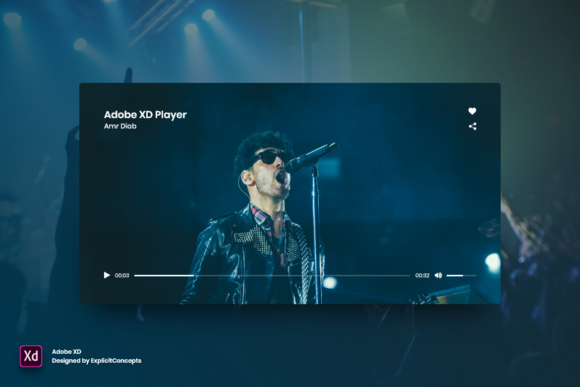
Video Player - Adobe XD: A Practical Guide for UI Designers
In the fast-paced world of user interface design, time is often the most scarce resource. Whether you are crafting a prototype for a mobile streaming app or designing a dashboard for a corporate training platform, recreating common UI elements from scratch can feel like reinventing the wheel. This is where a specialized Video Player - Adobe XD asset becomes invaluable. It is not just a graphic; it is a functional building block that accelerates your workflow, ensuring consistency and professionalism in your mockups without the heavy lifting of manual creation.
Bridging the Gap Between Concept and Prototype
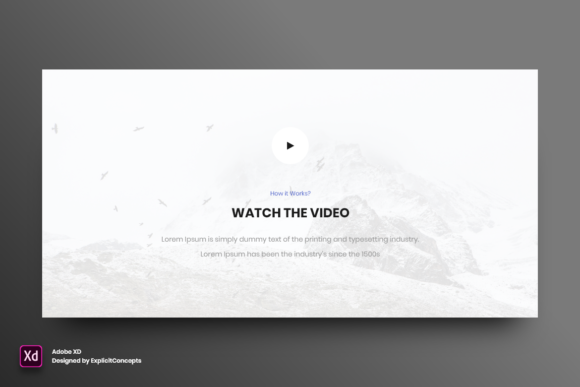
A video player interface is deceptively complex. On the surface, it appears to be a simple rectangle with a play button. However, a fully realized design includes progress bars, volume controls, timestamp displays, settings menus, fullscreen toggles, and overlay gradients for text readability. Designing these components individually for every screen state—paused, playing, buffering, or ended—can consume hours of productive time.
Using a pre-built Video Player - Adobe XD template allows designers to bypass this repetitive phase. Because the file is fully editable and well organized all in layers with clear names, you can dive straight into customization. You are not fighting against a flattened image or a messy group of unnamed vectors. Instead, you have immediate access to every control element, allowing you to rearrange, resize, or restyle components to fit your specific brand guidelines.
Real-World Applications Across Industries
The utility of a high-quality video player template extends far beyond entertainment apps. Different industries leverage these assets to communicate value, educate users, or enhance engagement. Here is how various professionals might integrate this tool into their projects.
E-Learning and Corporate Training
Instructional designers and UX writers often need to visualize how course content will appear within a Learning Management System (LMS). A clean, distraction-free video player is essential here. By using a Video Player - Adobe XD kit, an instructional designer can quickly mock up interfaces that highlight captioning options, playback speed controls, and chapter markers. The ability to easily edit texts, fonts, colors, move or remove elements means you can tailor the player to match the corporate branding of your client, ensuring the final prototype feels bespoke rather than generic.
Marketing and Landing Pages
For digital marketers, video is a conversion powerhouse. When designing landing pages, the placement and style of the video player can significantly impact user behavior. A designer might use this asset to test different layouts: perhaps a hero background video with minimal controls versus a prominent, boxed player with a strong call-to-action overlay. Since the format is Adobe XD, you can seamlessly transition from static design to interactive prototyping, demonstrating to stakeholders exactly how the video interaction will feel before a single line of code is written.
Social Media and Content Platforms
Startups building the next big social platform need to iterate quickly. They require a video player that supports modern interactions like double-tap to like, swipe to skip, or vertical scrolling feeds. A well-organized template provides the foundational UI elements needed to build these complex interactions. Because the layers are clearly named, developers can later inspect the design and understand the hierarchy of elements, reducing friction during the handoff process.
The Importance of Organization and Editability
Not all design assets are created equal. The true value of a premium Video Player - Adobe XD file lies in its structure. Many free resources online offer cluttered files where groups are nested arbitrarily, and colors are hard-coded into individual shapes. This makes customization a nightmare. In contrast, a professional-grade template prioritizes usability.
When a file is well organized all in layers with clear names, you gain several advantages:
- Speed: You can locate the "Play Button" or "Progress Bar" instantly without hunting through dozens of unnamed groups.
- Consistency: Global color changes can be applied more easily if the asset uses shared styles or logically grouped elements.
- Flexibility: If your design requires a minimalist player with only a play/pause toggle, you can simply hide or delete the unnecessary layers without breaking the rest of the composition.
This level of organization is crucial when working in teams. If a colleague needs to take over your file, they will appreciate the clarity. It reduces the cognitive load associated with navigating complex design files and ensures that the integrity of the design is maintained throughout the project lifecycle.
Technical Considerations for High-Quality Output
While Adobe XD is primarily a vector-based tool, video player interfaces often involve raster elements, such as thumbnail images or background textures. Ensuring that your asset is high quality 72 dpi is standard for screen-based design. This resolution is optimized for web and mobile displays, ensuring that your prototypes look crisp on retina screens without unnecessarily bloating the file size.
However, it is important to remember that 72 dpi is a screen standard. If you plan to export assets for print materials or high-resolution presentations, you may need to adjust your export settings accordingly. For most UI/UX purposes, though, this resolution strikes the perfect balance between visual fidelity and performance. The fact that the template is ready to use means you can drag and drop it into your existing project board and begin styling immediately, saving you from the tedious setup of artboards and grid systems.
Navigating Potential Limitations
While a Video Player - Adobe XD template is a powerful tool, it is not a substitute for understanding user experience principles. A common pitfall is assuming that the default layout of the template is the optimal solution for every context. For instance, a player designed for desktop viewing may have controls that are too small for touch interfaces on mobile devices. Designers must remain vigilant and adapt the template to the specific device constraints of their target audience.
Additionally, while the template provides the visual layer, it does not handle the actual video functionality. Adobe XD prototypes can simulate interactions, such as clicking play to change the icon to pause, but they cannot stream real video content. Stakeholders should be educated on this distinction to manage expectations during the review process. The template serves as a visual and interactive guide, not a functional product.
Customization Strategies for Unique Brands
To get the most out of your Video Player - Adobe XD asset, consider adopting a systematic approach to customization. Start by defining your brand’s primary and secondary colors. Use the editability of the file to update the progress bar, buttons, and icons to reflect these colors. Next, consider typography. If your app uses a specific sans-serif font for a modern look, replace the placeholder text in the timestamps and titles to ensure the visual harmony of the interface.
Don’t be afraid to move or remove elements that do not serve your specific use case. If your user research indicates that users rarely adjust volume within the app, consider removing the volume slider to declutter the interface. The flexibility of the file empowers you to make these data-driven design decisions without being constrained by the original template structure.
Ultimately, integrating a well-crafted video player template into your design toolkit is about efficiency and quality. It allows you to focus on the broader user journey and strategic design challenges, rather than getting bogged down in the minutiae of drawing vector shapes for buttons and sliders. By leveraging a Video Player - Adobe XD resource that is organized, editable, and high-quality, you elevate your workflow and deliver superior design solutions faster.