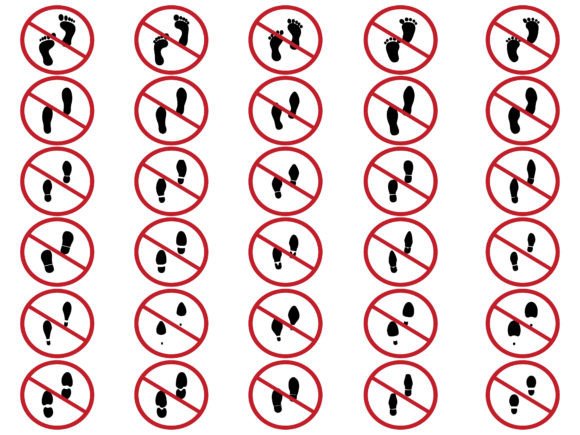
Mastering Safety and Compliance with the No Step Forbidden Icon Collection
In industrial, commercial, and even residential environments, clear visual communication is not just a design preference; it is a critical component of safety and operational efficiency. When physical boundaries must be respected to prevent accidents, damage, or liability issues, the No Step Forbidden Icon Collection serves as an essential resource for designers, facility managers, and safety compliance officers. This comprehensive digital asset library provides high-quality, versatile graphics that translate complex safety regulations into instantly recognizable visual cues. By leveraging this collection, professionals can ensure that "keep off" or "do not step" messages are communicated effectively across various media, from heavy-duty floor signage to digital manuals and architectural blueprints.
The Critical Need for Clear Visual Boundaries
Every day, facilities face the challenge of protecting sensitive equipment, maintaining clean zones, and ensuring pedestrian safety. Traditional text-only warnings often fail because they require literacy, specific language proficiency, and time to read. In high-traffic areas or emergency situations, individuals react to symbols faster than words. The primary goal of using a dedicated icon set like the No Step Forbidden Icon Collection is to bridge this communication gap. Whether you are marking a wet floor, restricting access to a mechanical room, or defining safe pathways in a warehouse, the visual clarity provided by standardized icons reduces cognitive load and minimizes the risk of human error.
Moreover, inconsistent branding or poorly designed safety signs can undermine authority and compliance. If a warning sign looks amateurish or is difficult to see due to low resolution, it may be ignored. This collection addresses these pain points by offering professionally designed assets that maintain visual integrity at any size. The need for such resources extends beyond physical safety; it also encompasses brand consistency for companies that produce safety training materials, instructional guides, or facility management software.
Versatility Through Comprehensive File Formats
One of the most significant advantages of the No Step Forbidden Icon Collection is its adaptability across different platforms and production methods. Users receive a robust package containing 330 PNG files and 330 SVG files, covering both vertical and horizontal orientations. This variety ensures that regardless of the layout constraints—whether it is a narrow sidebar in a digital manual or a wide banner on a factory wall—there is a perfectly oriented icon ready for use.
The inclusion of 300 DPI PNG files is particularly crucial for print applications. High-resolution raster images ensure that when these icons are printed on vinyl stickers, metal plates, or large-format posters, they remain crisp and legible. Blurry or pixelated icons can appear unprofessional and may fail to convey urgency. For digital applications, such as websites, apps, or interactive kiosks, the SVG files offer infinite scalability without loss of quality. This vector format allows developers and designers to resize icons dynamically based on screen dimensions, ensuring optimal visibility on everything from smartphones to large monitoring displays.
For professional graphic designers and engineers who need to integrate these symbols into larger compositions, the collection includes 11 EPS files and 1 AI file containing all designs. These editable vector formats allow for precise customization. You can adjust colors to match corporate branding, modify line weights for better visibility at distance, or combine elements to create custom safety diagrams. Additionally, the 11 JPG files provide quick-access options for presentations, internal documents, or rapid prototyping where editing capabilities are not required.
Practical Applications Across Industries
The utility of the No Step Forbidden Icon Collection spans a wide array of industries. In manufacturing and logistics, these icons are vital for marking hazardous zones, such as areas around heavy machinery, conveyor belts, or loading docks. By placing clear "no step" indicators, facilities can prevent workers from accidentally entering dangerous operational zones. Similarly, in the construction industry, these graphics can be used in site plans and safety briefings to highlight unstable surfaces or restricted areas during building phases.
The healthcare sector also benefits significantly from clear boundary markers. Hospitals and clinics often have sterile zones or areas with sensitive medical equipment where foot traffic must be minimized or controlled. Using standardized, high-quality icons helps maintain hygiene standards and protects expensive diagnostic tools. In retail and public spaces, these icons can guide customer flow, preventing access to staff-only areas or protecting display units from damage.
Furthermore, digital content creators and educators find immense value in this collection. Those developing online safety courses, e-learning modules, or instructional videos can use the SVG and PNG assets to create engaging, visually consistent materials. The ability to choose between vertical and horizontal orientations allows for seamless integration into video overlays, slide decks, and user interface designs, enhancing the educational experience without distracting from the core message.
Tailoring the Approach for Different Users
Different professionals will approach the No Step Forbidden Icon Collection with unique objectives. A facility manager might focus on the immediate practicality of the PNG files for printing durable floor decals. Their priority is durability and clarity, ensuring that the 300 DPI resolution holds up under foot traffic and cleaning chemicals. They may prioritize the horizontal orientations for wide walkways and vertical ones for doorways or narrow corridors.
Conversely, a graphic designer working on a corporate safety handbook will likely leverage the AI and EPS files. Their goal is aesthetic consistency and brand alignment. They might tweak the color palette of the icons to match the company’s official safety colors, ensuring that the "no step" symbol integrates seamlessly with other regulatory icons in the document. The vector nature of these files allows them to scale the icons precisely to fit grid layouts without worrying about pixelation.
Software developers and UX designers, on the other hand, will find the SVG files indispensable. In creating facility management apps or interactive safety maps, they need lightweight, scalable assets that load quickly and render sharply on any device. The availability of both vertical and horizontal SVGs allows them to adapt the interface dynamically, ensuring that the warning icons are prominent yet unobtrusive within the digital layout.
Implementation Best Practices
To maximize the effectiveness of the No Step Forbidden Icon Collection, consider the context in which the icons will be viewed. For physical signage, contrast is key. Ensure that the icon stands out against its background. While the collection provides high-quality base designs, pairing them with high-visibility colors like yellow, red, or orange can enhance detection rates. When using the EPS or AI files for custom designs, maintain sufficient white space around the icon to prevent visual clutter, which can dilute the warning’s impact.
Consistency is another crucial factor. If you are updating an entire facility’s signage system, use the same style and orientation of icons throughout. Mixing different styles can cause confusion and reduce the overall effectiveness of the safety communication strategy. Utilize the comprehensive nature of this collection to standardize your visual language across all departments and locations.
Finally, remember that icons are part of a broader safety ecosystem. While the No Step Forbidden Icon Collection provides excellent visual tools, they should be used in conjunction with clear textual instructions and proper training. The icons serve as immediate alerts, but ongoing education ensures that individuals understand the reasons behind the restrictions, fostering a culture of safety and compliance.
By investing in a high-quality, versatile resource like this collection, organizations can enhance their safety protocols, improve operational efficiency, and protect both their assets and their people. The combination of high-resolution raster images, scalable vectors, and editable source files makes it a complete solution for any professional tasked with communicating boundaries clearly and effectively.