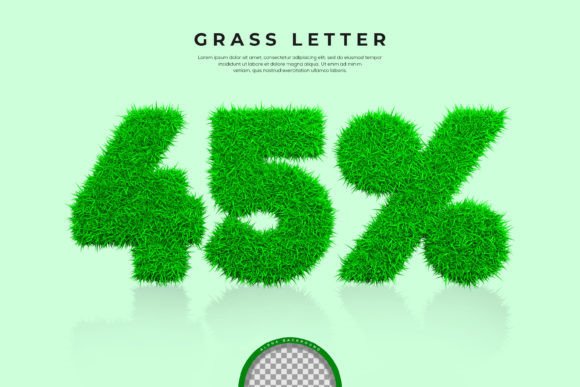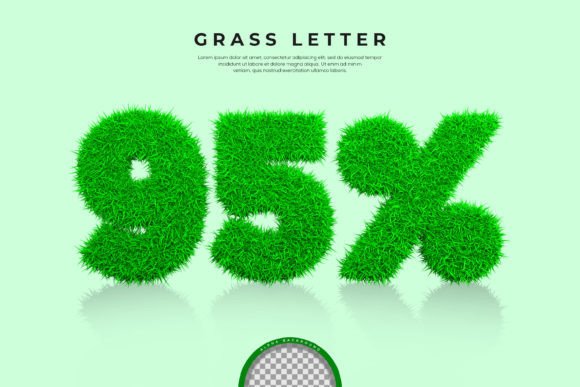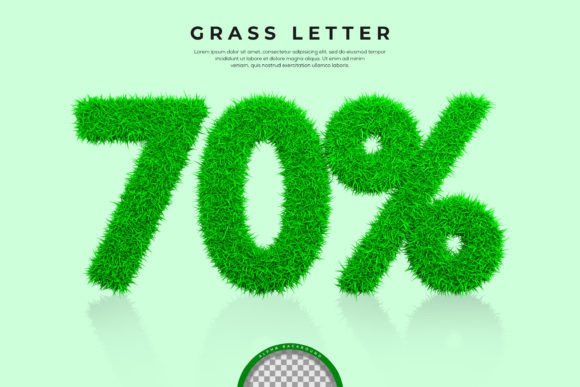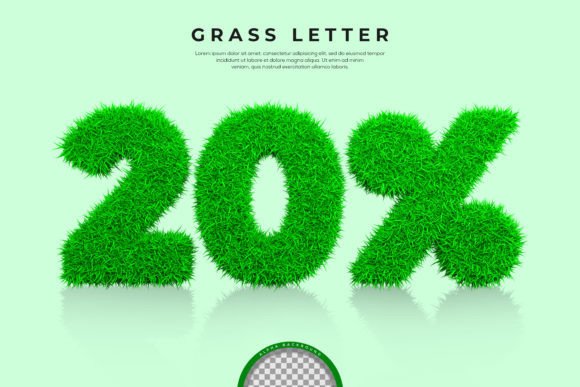
Green Grass of 20 Off in 3D Text Render: Elevating Digital Design with Realism
In the rapidly evolving landscape of digital marketing and graphic design, the demand for high-impact visual content has never been greater. Audiences are increasingly sophisticated, scrolling past generic stock imagery and flat designs in favor of content that offers depth, texture, and a sense of tangible reality. This shift has placed 3D text rendering at the forefront of modern creative workflows. Among the various styles gaining traction, the "Green Grass" aesthetic stands out for its ability to evoke freshness, growth, and organic connection. The recent availability of specialized templates, such as the Green Grass of 20 off in 3D Text Render, provides creators with a powerful tool to harness this trend without the steep learning curve traditionally associated with three-dimensional design.
This article explores the significance of realistic grass 3D rendering text, examining why it resonates with current market preferences and how accessible, high-quality templates are democratizing advanced design techniques for professionals, entrepreneurs, and hobbyists alike.
The Rise of Organic Textures in Digital Branding
For years, digital design was dominated by sleek, minimalist aesthetics characterized by flat colors and sharp vectors. While effective for clarity, this approach often lacked emotional warmth. As brands seek to humanize their presence and connect with audiences on a deeper level, there has been a noticeable pivot toward organic textures. Materials like wood, stone, water, and notably, grass, bring a sensory quality to digital screens that flat design cannot replicate.
The use of realistic grass in 3D text rendering is not merely a stylistic choice; it is a strategic communication tool. Greenery is universally associated with nature, sustainability, health, and renewal. For businesses in the eco-friendly sector, wellness industry, or agricultural markets, incorporating these elements into typography instantly reinforces brand values. Even for unrelated industries, the juxtaposition of rigid typography with soft, natural textures creates a visually arresting contrast that captures attention in crowded social media feeds.
However, creating such visuals from scratch requires significant technical expertise. Traditional 3D modeling involves complex software knowledge, lighting setup, and rendering time. This is where pre-made, high-quality templates become invaluable. They bridge the gap between professional-grade output and user-friendly accessibility, allowing creators to focus on messaging rather than mechanics.
Accessibility Meets High-Quality Rendering
The primary barrier to entry for 3D design has always been complexity. Many potential users hesitate to adopt 3D elements because they perceive the process as time-consuming and technically demanding. The Green Grass of 20 off in 3D Text Render template challenges this perception by prioritizing ease of use without compromising on quality. Designed with the explicit aim of simplifying the user experience, these templates allow for professional results with just a few clicks.
At the core of this accessibility is the use of Smart Object Replacement Layers. In Adobe Photoshop, Smart Objects preserve an image's source content with all its original characteristics, enabling non-destructive editing. For the user, this means the intricate work of mapping text onto 3D grass models, calculating shadows, and adjusting lighting has already been done. To customize the design, one simply needs to double-click the smart object layer, input their desired text, save, and watch the main canvas update automatically. This workflow reduces what could be hours of labor into minutes of simple editing.
Furthermore, the flexibility of these templates ensures they can adapt to various brand identities. All colors can be changed easily, allowing designers to match specific corporate palettes or seasonal themes. Whether a brand requires a vibrant spring green or a muted, earthy tone, the underlying structure of the render supports seamless adjustment. This level of customization is crucial for maintaining brand consistency across different marketing channels.
Technical Specifications and Professional Standards
While ease of use is critical, it must not come at the expense of output quality. In professional printing and high-resolution digital displays, pixelation and low resolution are unacceptable. The templates discussed here are engineered to meet rigorous professional standards, offering a High-Quality 3D Rendering Text Resolution of 4500 x 3000 pixels with 300 DPI (dots per inch).
This specification is significant for several reasons. First, 300 DPI is the standard requirement for high-quality print materials, such as brochures, posters, and packaging. Many online templates offer only 72 DPI, which is suitable for web use but fails when scaled for print. By providing 300 DPI files, these templates ensure versatility, allowing users to deploy the same asset across both digital platforms and physical media without loss of clarity.
Second, the large dimensions (4500 x 3000) provide ample space for detailed cropping and composition adjustments. Designers can isolate specific parts of the text or background to create unique layouts for social media stories, website headers, or banner ads. The inclusion of both PSD (Photoshop Document) and JPG files further enhances usability. The PSD file retains all editable layers and smart objects for customization, while the JPG offers a ready-to-use preview or final export for quick sharing.
The organization of the file structure also reflects a professional approach. Layers are clearly labeled and logically grouped, reducing confusion and speeding up the editing process. This attention to detail respects the user’s time and acknowledges that professional designers often work under tight deadlines. An organized file is not just a convenience; it is a hallmark of a well-crafted product.
Practical Applications for Creators and Businesses
The versatility of realistic grass 3D text renders opens up a wide array of practical applications across various industries. Understanding how to leverage these assets can significantly enhance visual communication strategies.
- Eco-Friendly and Sustainable Brands: Companies promoting sustainability, organic products, or environmental conservation can use these renders to visually align their messaging with their values. A campaign headline rendered in lush grass immediately communicates a connection to nature.
- Event Promotion: Spring festivals, outdoor concerts, gardening workshops, and Earth Day celebrations benefit from the fresh, energetic vibe of grass-textured typography. It sets the tone for the event before the attendee even reads the details.
- Social Media Engagement: In the scroll-heavy environment of Instagram and Pinterest, standout visuals are essential. 3D text with realistic textures stops the scroll. Marketers can use these templates to create eye-catching quotes, announcements, or promotional offers that differ from the standard flat graphics.
- Web Design and Landing Pages: Hero sections on websites can utilize these high-resolution renders to create immediate visual interest. The depth and realism add a premium feel to the user interface, enhancing perceived brand value.
- Educational Content: Educators and bloggers focusing on biology, environmental science, or landscape design can use these visuals to make their content more engaging and visually appealing to students and readers.
It is important to note that while the templates provide the framework, the creative direction remains in the hands of the user. The images included in preview galleries are often examples for presentation purposes only, demonstrating the potential of the tool. Users are encouraged to experiment with different fonts, color gradients, and background compositions to create unique outputs that reflect their specific vision.
Integrating 3D Elements into Modern Workflows
The adoption of tools like the Green Grass of 20 off in 3D Text Render reflects a broader trend in creative technology: the democratization of high-end effects. As software becomes more intuitive and pre-made assets more sophisticated, the gap between amateur enthusiasts and professional designers narrows. This does not diminish the value of professional skills but rather empowers a wider range of creators to produce competent, attractive work.
For freelancers and small business owners, this efficiency translates directly to cost savings. Hiring a 3D artist for custom text rendering can be expensive and time-consuming. Using a well-organized, editable template allows these individuals to maintain a high standard of visual quality while managing their budgets and timelines effectively. It enables them to iterate quickly, testing different messages and designs without incurring additional costs.
Moreover, the ability to easily edit and customize these templates fosters creativity. When the technical hurdles are removed, users are free to experiment. They might try combining the grass texture with other elements, adjusting lighting to match specific moods, or integrating the text into complex composite images. This freedom encourages innovation and helps users develop their unique visual style.
Making the Most of Your Design Assets
To maximize the value of these 3D text templates, users should consider a few best practices. First, always work with the highest resolution source file (the PSD) to ensure maximum flexibility. Second, pay attention to lighting and shadow consistency if you are compositing the text into a larger scene. While the template handles the internal lighting of the 3D text, ensuring it matches the ambient light of your background image will enhance realism.
Additionally, explore the full range of customization options. Do not limit yourself to the default green. Experiment with autumnal browns, snowy whites, or even fantastical colors to suit different themes. The smart object technology supports any text input, so feel free to test various font weights and styles to see which interacts best with the grass texture.
Finally, remember that these tools are part of a larger ecosystem of creative resources. Exploring other works by the same creator can reveal complementary assets, such as different nature-inspired textures or alternative 3D styles. Building a library of reliable, high-quality templates can streamline your workflow and provide a consistent foundation for your design projects.
In conclusion, the Green Grass of 20 off in 3D Text Render represents more than just a discount on a digital product; it signifies a shift toward accessible, high-quality design solutions. By combining realistic 3D rendering with user-friendly editing features, these templates empower creators to produce stunning, professional-grade visuals efficiently. As the demand for authentic, textured content continues to grow, leveraging such tools will remain a smart strategy for anyone looking to enhance their visual communication in the digital age.